Showing posts with label Network Effects. Show all posts

Tuesday, 29 April 2025

Rush Hour Economics: Does Congestion Pricing Work?


Figure 1: Traffic Congestion  Source: Dreamstine.com@Ruslan Sitarchuk
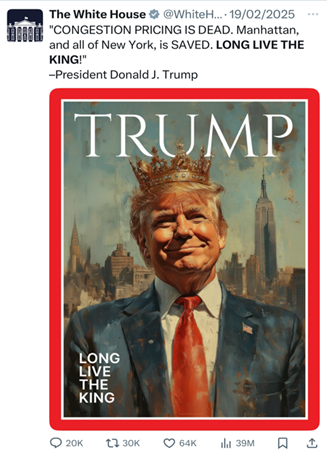
Figure 2: A Post From the Trump Administration Source: X@WhiteHouse

Have you ever been stuck in traffic, watching the minutes tick by while your frustration rises? You're not alone. The average commuter wastes 54 hours and over $1,000 annually in congestion! While London, Singapore, and Stockholm tackled this problem with congestion pricing, New York City's similar plan was abruptly halted in March 2024 by the Trump administration. Why was the plan terminated? Do these pricing schemes actually work? Let me show you how traffic jams reveal surprising lessons about economics.

Why Our Driving Affects Others? Negative Side Effects

When you drive into a congested area, you're thinking about your own costs – gas, time, maybe parking. What you're not considering are the costs you're imposing on everyone else. Each additional car on a busy road slows down traffic for everyone, creating what economists call a "negative externality." This concept was first formalized by Arthur Cecil Pigou back in 1920, but it perfectly explains our modern traffic woes. 
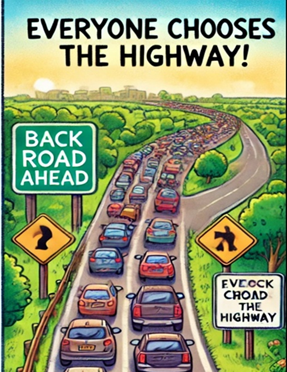

Figure 3: Two-Road Scenario Source: AI generated 


Figure 4: Pigouvian environmental tax on negative externalities. Source: Nerudova, D., Dobranschi, M., & Adam, V. (2019). Can Pigouvian taxation internalize the social cost of platinum-group element emissions? 

Imagine two routes between the same points – a highway and a slower back road. Everybody naturally chooses the highway based on their own benefit. But as more people make this choice, the highway gets congested, eventually becoming slower than the alternative! This happens because we don't pay for the delay we cause others when we join an already crowded road.


This externality creates a gap between the private cost that individuals consider and the true social cost of their actions. As shown in the diagram, without tax, we're stuck at inefficient point A where people overconsume because they ignore external costs. The tax fixes this by making consumers face true social costs, shifting us to optimal point B at quantity Q₁. The shaded triangle represents the eliminated inefficiency – economic gain from cutting wasteful consumption! The tax reduces congestion to an efficient level and maximizes overall welfare.​​​​​​​​​​​​​​​

Why ‘Free’ Roads Get Overused? The Commons Problem

Urban streets represent what economists call a "common resource" – something anybody can use (non-excludable) but where one person's usage reduces availability for others (rival). This classification explains why road networks inevitably face overuse and congestion without proper management.

As Frank Knight insightfully observed back in 1924, if roads were privately owned, owners would naturally charge more during peak periods to maximize value. Roads are mostly government-owned but unpriced, meaning costs remain chronically below their true value, leading to excess demand. This early insight connects traffic directly to what economists now call the "tragedy of the commons" – when a shared resource gets overused because no individual bears the full cost of their consumption.

During peak periods, this divergence becomes even more pronounced - think of roads like an all-you-can-eat buffet with no price difference between peak and off-peak hours. Of course, it gets overcrowded at dinner time! The result is wasted time, excessive pollution, and economic inefficiency that costs modern economies billions annually.

This example extends perfectly to busy urban centers where the problem intensifies dramatically. City centers experience the worst congestion precisely because they're valuable destinations where many people want to be simultaneously. Without proper pricing mechanisms, we create artificial scarcity through queuing rather than efficient allocation through market signals, turning potentially productive time into wasteful waiting.​​​​​​​​​​​​​​​​

Why We Keep Choosing Busy Roads? Psychological Insights

People sometimes make irrational decisions—we keep choosing routes that always seem to be congested. Behavioral economics reveals several fascinating biases affecting our transportation choices. 


Figure 5: Behavioral Economics is about our mind

At first, we hate changing routines: Most commuters never seriously reconsider their route or mode, even when alternatives would save time and money. This "status quo bias" keeps us stuck in inefficient patterns. Secondly, we don’t like risks: When considering a longer alternative route, we worry about the risk of spending more time way much more than time wasted on a shorter route's congestion which already equals or exceeds the time needed for the longer route. This "loss aversion" also makes us stuck in inefficient patterns. Hyperbolic discounting explains our persistent choice of congested roads because we irrationally overvalue the immediate gratification of taking a seemingly shorter or more familiar route while severely discounting the future pain of sitting in traffic that we'll experience just minutes later.

These cognitive biases explain why traffic solutions can't rely solely on rational economic incentives. Our decision-making is flawed in predictable ways, creating persistent inefficiencies in transportation networks. Policy solutions must account for these psychological quirks.

What Can Our City Council Do? Possible Solutions

Tax on congestion and pricing on using roads in busy areas are different routes but same destination. When cities implement congestion pricing, they transform roads from "common resources" into what economists call "club goods" – still limited in capacity but now with managed access.

The results from cities brave enough to try this approach have been remarkable: London saw traffic drop 30% in the charging zone with dramatically improved bus service; Singapore maintains free-flowing traffic even during traditional peak hours; and Stockholm experienced a 14% decrease in carbon emissions while significantly reducing commute times. These success stories demonstrate how properly designed pricing mechanisms can effectively balance demand with available capacity, creating more efficient and sustainable urban transport systems that benefit residents through reduced pollution, shorter travel times, and more reliable public transit options.​​​​​​​​​​​​​​​​

Figure 6: The Congestion Charge Zone in London Source: Transport For London (tfl.gov.uk)


Figure 7: Average changes of traffic volumes for different types of roads on weekdays 6:00–19:00, April 2006 compared to April 2005. Source: Eliasson, J., Hultkrantz, L., Nerhagen, L., & Rosqvist, L. S. (2009). The Stockholm congestion-charging trial 2006: Overview of effects. Transport Policy, 16(5), 395-403.

The most sophisticated congestion pricing systems vary by time, location, and vehicle type, but implementation details are crucial. Successful approaches apply behavioral economics: positive framing reduces loss aversion (Kahneman and Tversky's prospect theory); trials overcome status quo bias; and visible revenue investments leverage the availability heuristic. Stockholm exemplifies this—opposition flipped from 70% against to 74% approval after experiencing benefits, demonstrating both preference reversal and Thaler and Sunstein's Nudge Theory principles. These behavioral insights explain why carefully designed implementations succeed where purely economic approaches might fail.​​​​​​​​​​​​​​​​

What We Have Got Now? A Conclusion

Traffic isn't inevitable — it's the predictable result of misaligned economic incentives. NYC's pause on congestion pricing ignores decades of economic insight and global proof that it works. Cities worldwide use smart pricing to cut congestion and boost mobility fairly and effectively. Next time you're stuck in traffic, remember: it's not just traffic engineering, it's about economics. Sometimes the best solution to a problem is putting the right price on it.

Reference List

Eliasson, J., Hultkrantz, L., Nerhagen, L., & Rosqvist, L. S. (2009). The Stockholm congestion-charging trial 2006: Overview of effects. Transport Policy, 16(5), 395-403.

Hardin, G. (1968). The Tragedy of the Commons. Science, 162(3859), 1243-1248.

Kahneman, D., & Tversky, A. (1979). Prospect Theory: An Analysis of Decision under Risk. Econometrica, 47(2), 263-291.

Knight, F. H. (1924). Some fallacies in the interpretation of social cost. The Quarterly Journal of Economics, 38(4), 582-606.

Leape, J. (2006). The London congestion charge. Journal of Economic Perspectives, 20(4), 157-176.

Metcalfe, R., & Dolan, P. (2012). Behavioural economics and its implications for transport. Journal of Transport Geography, 24, 503-511.

Pigou, A. C. (1920). The Economics of Welfare. Macmillan and Company.

Transport for London. (2023). Congestion Charge Impact Assessment. Retrieved from www.tfl.gov.uk/corporate/publications-and-reports

Monday, 28 April 2025

Are We Really Choosing? The Microeconomic Logic Behind Algorithmic Recommendations

 Have you ever logged into Netflix to relax, only to binge-watch a show you’d never heard of—let alone searching for? It felt like your choice… but was it?

In today’s digital world, with more than 5.56 billion internet users and algorithms working behind every major platform—from TikTok to Amazon—our daily decisions are increasingly shaped by invisible forces (DATAREPORTAL,2025). Whether it's choosing what to watch, wear, or buy, algorithms don’t just assist us-they influence us.

This article explores how algorithmic recommendations subtly shape consumer behavior through four key lenses from microeconomics and behavioral economics: choice architecture, salience, herd behavior, and loss aversion.


Algorithmic Framing as Digital Choice Architecture

Let’s start with the basics. In microeconomic terms, choice architecture refers to how the environment or presentation of options affects decision-making (Saddique,2023). Algorithms play the role of digital “choice architects” by designing the menus we browse.

Take Netflix’s “Because you watched…” row or Spotify’s “Discover Weekly”. These aren't just helpful suggestions—they are carefully curated nudges. Drawing from Thaler and Sunstein’s Nudge Theory, we know that people tend to follow the easiest or default path, especially when the cost of thinking or exploring alternatives is high (Wikipedia Contributors,2018).

Behavioral economics explains this through two concepts: default bias and cognitive laziness(Andreas&Dmitry Ryvkin&Tom&Jingjing,2023). Most of us prefer low-effort decisions. So, when an algorithm makes a choice seem natural or pre-selected, we follow along—without realizing we’ve been nudged.


In fact, platforms like Netflix report increased user engagement (longer watch times) after implementing personalized recommendation features. This isn't a coincidence—it’s a design feature. But beyond default options, what catches our attention may matter even more than how it's presented.


Salience and Attention Bias: What Stands Out, Sells

Now that we’ve chosen something to explore, the next question is: why do certain items catch our attention more than others?

Algorithms highlight content or products that appear “relevant”, boosting their salience—how noticeable or prominent they are. But the catch is: that what’s salient isn’t always what’s best.

From a behavioral economics perspective, salience bias causes people to overvalue what’s visually or mentally prominent (JASONHREHA,n.d). For example, on Amazon, “Recommended for You” items often receive more clicks than better-reviewed or more affordable options—simply because they appear first or are visually highlighted (Michael,2021).

In microeconomics, this links to bounded rationality—the idea that consumers don’t process all available information. Instead, we rely on shortcuts, like picking what stands out the most (Paul,2021).

One study found that products at the top of a recommendation list get vastly more engagement than those further down, even if their quality is similar (Hong&Ling&Sumeet,2018). So again, the algorithm isn't just helping—it’s guiding. Still, it is not only shaped by prominence-it is also swayed by what everyone else is looking for.


Herd Behavior: Why We Follow the Digital Crowd

Humans are social animals. When uncertain, we often imitate others. Algorithms know this—and use it.

By labeling items as “trending”, “most viewed”, or “top seller”, platforms activate herd behavior. From a microeconomic standpoint, this is linked to network externalities: the more people use or buy something, the more valuable it becomes to others (John&Tanya,2015).

Take TikTok. Products like Stanley cups or UGG slippers go viral not necessarily because they’re the best, but because they appear to be popular. The more they show up in users’ feeds, the more people buy them-creating a feedback loop where popularity feeds popularity.

This is also a case of informational cascades. When individuals observe others’ actions—without knowing their reasoning—they follow along, assuming the crowd must be right (Wikipedia,2022).

Data from Google Trends and sales platforms like TikTok show a clear correlation between TikTok mentions and sales spikes. Algorithms don’t just reflect popularity—they create it. What’s more, once you feel others are acting fast, you might be compelled to act even faster—out of fear of missing out.


Loss Aversion and FOMO: The Power of Scarcity

Finally, let’s talk about one of the most emotionally charged forces in behavioral economics: loss aversion.

According to the Prospect Theory by Kahneman and Tversky, the pain of losing something is psychologically more intense than the pleasure of gaining it (Behavioral Economics,2015). Algorithms exploit this through FOMO (Fear of Missing Out).

Ever seen messages like “Only 1 room left” or “10 people viewing this deal” on Booking.com? These cues create artificial scarcity and urgency. Suddenly, the fear of losing a good deal overrides our rational thinking.

These tactics aren’t random—they are optimized by A/B testing. Platforms have found that even minor urgency nudges can significantly boost conversion rates (Avinash,2018). In economic terms, these triggers distort our marginal utility—we act impulsively, not because the product offers more value, but because we fear losing the chance to buy it.


Conclusion: Empowerment or Manipulation?

Algorithms have undeniably improved convenience. They save us time, tailor content to our preferences, and enhance user experience. But they also raise a serious question: Are we still in control of our decisions?

From a microeconomic perspective, algorithmic platforms have created a marketplace marked by asymmetric information—where the system knows far more about the consumer than vice versa (B. Roy&Raymond J.,2010). The result is a shift in consumer sovereignty (Wikipedia,2020): instead of buyers choosing freely, we are increasingly responding to choices designed by machines.

To be clear, this isn’t about blaming technology. It’s about awareness. Algorithms aren’t neutral—they’re engineered to drive engagement and profits, often using subtle behavioral nudges.

So, next time you tap “Add to Cart” or click “Play Next Episode”, ask yourself:

Was that truly your choice—or just a really clever push from an algorithm?


Reference list

Ansari, S. (2023). Choice Architecture. [online] Economics Online. Available at: https://www.economicsonline.co.uk/definitions/choice-architecture.html/.

Arsenault, M. (2021). The Amazon Recommendations Secret to Selling More Online. [online] www.rejoiner.com. Available at: https://www.rejoiner.com/resources/amazon-recommendations-secret-selling-online.

Behavioural Economics (2015). Loss aversion | Behavioraleconomics.com | The BE Hub. [online] Behavioraleconomics.com | The BE Hub. Available at: https://www.behavioraleconomics.com/resources/mini-encyclopedia-of-be/loss-aversion/.

Boyce, P. (2021). Bounded Rationality Definition | BoyceWire. [online] boycewire.com. Available at: https://boycewire.com/bounded-rationality-definition/.

DATAREPORTAL (2025). Digital around the World. [online] DataReportal. Available at: https://datareportal.com/global-digital-overview.

Frieden, B.R. and Hawkins, R.J. (2010). Asymmetric information and economics. Physica A: Statistical Mechanics and its Applications, 389(2), pp.287–295. doi:https://doi.org/10.1016/j.physa.2009.09.028.

JASONHREHA (n.d.). Salience Bias. [online] https://www.thebehavioralscientist.com. Available at: https://www.thebehavioralscientist.com/glossary/salience-bias.

Kaushik, A. (2018). Six Nudges: Creating A Sense Of Urgency For Higher Conversions Rates! [online] Occam’s Razor by Avinash Kaushik. Available at: https://www.kaushik.net/avinash/nudges-creating-urgency-higher-conversions-revenue/.

McGee, J. and Sammut‐Bonnici, T. (2015). Network Externalities. Wiley Encyclopedia of Management, 6, pp.1–5. doi:https://doi.org/10.1002/9781118785317.weom120053.

Ortmann, A., Dmitry Ryvkin, Wilkening, T. and Zhang, J. (2023). Defaults and cognitive effort. Journal of Economic Behavior and Organization, 212, pp.1–19. doi:https://doi.org/10.1016/j.jebo.2023.05.020.

Wikipedia (2020). Consumer sovereignty. [online] Wikipedia. Available at: https://en.wikipedia.org/wiki/Consumer_sovereignty.

Wikipedia (2022). Information cascade. [online] Wikipedia. Available at: https://en.wikipedia.org/wiki/Information_cascade.

Wikipedia Contributors (2018). Nudge theory. [online] Wikipedia. Available at: https://en.wikipedia.org/wiki/Nudge_theory.

Zhang, H., Zhao, L. and Gupta, S. (2018). The role of online product recommendations on customer decision making and loyalty in social shopping communities. International Journal of Information Management, [online] 38(1), pp.150–166. doi:https://doi.org/10.1016/j.ijinfomgt.2017.07.006.


Likes, Laws and Lost Time: The Economics of Social Media


Some of you might be familiar with the phrase ‘if the product is free, you are the product’. Social media platforms often thrive in an environment of deep-rooted insecurity, where our deteriorating attention spans are used as currency. Behind the mask of trends and staying in touch, there is a sea of negative externalities impacting users everywhere. Negative externalities, whereby a transaction between firm and user has negative third-party spillover effects, are prevalent within social media platforms. The trade between platforms, providing access and algorithms, and users, providing attention and content, can often impact surrounding parties. Whether it be through driving insecurity, promoting extensive time-wasting, or even turning society into ‘dopamine junkies’, this is an issue that affects the masses. This post explores all the ways in which social media has turned us into their best-selling product.

The Birth of Social Media

The desire for social contact is embedded in humans. From letter to phone to fax to pigeon, nothing compares to the communicative revolution which the internet brought. Social media gave birth to a world where communication no longer requires effort. It fed our fix for personal contact while skipping the pressures, awkwardness and emotion of real conversation. Katz and Shapiro (1985) discussed the concept of a product’s value increasing as more people consumed it, and it was these network effects which drove our dependence on social media: communities of like-minded people whose friendships only exist through the internet, firms whose brands rely on manufactured personalities to foster relationships with consumers (Rasul, 2018) and news outlets whose stories can reach the public eye faster than ever before. Above all, it became the centrepiece of our entertainment, feeding us easily digestible content anytime, anywhere.

An Attention Economy

It comes as no shock that the repercussions of social media are not wholly positive; terms such as ‘doomscrolling’ and ‘FOMO’ are commonplace for avid social media users. The concept of hyperbolic discounting is a cognitive bias where individuals place disproportionate weight on rewards in the present, more than those farther in the future, regardless of said later ‘reward’ being more valuable. This effect is evident with extensive scrolling on social media - wasting time in pursuit of the short-term dopamine boosts that social media has been identified to produce. Society has become glued to social media, hooked on superficial ‘feel-good’ feelings, neglecting real-world growth and the acquisition of meaningful experiences.

Further, social media has exacerbated the already prevalent issue of commodity fetishism, in its constant display of unrealistic lifestyles and attributes. In current society, natural human insecurity has become a sales technique, something to convert into profit; jealousy of others has fuelled desires to fix insecurity through various purchases. This ‘fetishism’, a theory developed by Marx (1867) describes how commodities are assigned value beyond the labour and capital used to produce them. This is particularly evident in social media trends, where what’s really being sold is not the product itself, but the illusion of a perfect lifestyle. Asymmetric information allows corporations to exploit user data, targeting insecurities through personalised ads that few realize they have consented to. In a world where insecurity is monetised, social media has turned self-image into a never-ending transaction, pushing unattainable standards.

Cult-Formation and Squabble-Elevation

At what point do our communities become cults? Hopefully, never. However, with our data constantly training an algorithm profiting from our attention, widespread digital echo chambers have become all too prominent. Considering the findings of Tajfel (1970), who discovered that people will favour those with similar qualities even when group differences are negligible, the division sought through streams of content tailored towards our ideals and beliefs is obvious. A stellar example of this is the political culture in the USA. If your algorithm detects a slight lean to either ideology, related content floods your feed, reinforcing these ideals or bashing those opposing them. Therefore, these users begin to experience an anchoring bias towards their political beliefs, causing confirmation bias to convert rational discussions into irrational squabbles. These platforms create cycles of content used to polarise groups, reaffirm beliefs and generate value in the form of sustained attention. Political disagreements become bitter rivalries, transforming the democratic process into a machine for churning harmful externalities. These include violence, irrational policy decisions, and misinformation utilised for the sole purpose of capturing attention and fuelling hatred. The weaponisation of social media acts as a looming threat to us all.

This effect is also prominent in the ‘Manosphere’, a collection of anti-feminist communities online. Habib et al. (2022) found a single incident of acceptance in these communities has a significant impact on an individual’s language and outlook. The ease of this radicalisation has terrifying consequences for women and families that may become torn apart. These are only a couple of examples, yet the harm to welfare may be massive - social media cannot be allowed this power.

Never a Quick Fix

Considering this, what can governments do to reduce the impact of this issue? The Online Safety Act 2023 (2024) is an excellent example of security measures implemented so far, featuring increased transparency over harmful content, improved age-restrictions and providing parents with the ability to report problems when they do occur. Mandates to push more positive content into peoples’ feeds, instead of content that may harm one’s well-being, can be another feasible option if implemented with careful thought and consideration.

To Conclude

There is a fine line between regulation that is cautionary as opposed to totalitarian. Arguably, controlling people’s feeds to portray a more positive image is no different to how social media currently pushes material that preys on insecurity; at what point does this prevention of harmful externalities lead to the restriction of our thoughts, feelings and freedom?

With social media being such a dominant force in our culture, it has the power to help and to harm us. It was made to bring us together, and that is how we can solve this problem - together

References:

Department for Science, Innovation and Technology (2024). Online Safety Act: explainer. [online] GOV.UK. Available at: https://www.gov.uk/government/publications/online-safety-act-explainer/online-safety-act-explainer.

Habib, H., Srinivasan, P. and Nithyanand, R. (2022). Making a Radical Misogynist. Proceedings of the ACM on Human-Computer Interaction, 6(CSCW2), pp.1–28.

Katz, M.L. and Shapiro, C. (1985). Network Externalities, Competition, and Compatibility. The American Economic Review, 75(3), pp.424–440

Marx, K. (1996). Das Kapital : A critique of political economy. Washington, D.C., New York: Regnery Pub

Rasul, T. (2018). Social Media’s Growing Influence on Relationship Marketing and Corporate Culture. The Journal of Developing Areas, 52(1), pp.261–268.

Tajfel, H. (1970). Experiments in Intergroup Discrimination. Scientific American, 223(5), pp.96–103